
OpenAI Apps: From Chat to Platform
OpenAI is not presenting ChatGPT as a tool anymore. It is turning it into a platform. A space where interaction, creation and transactions start to blend into one flow.

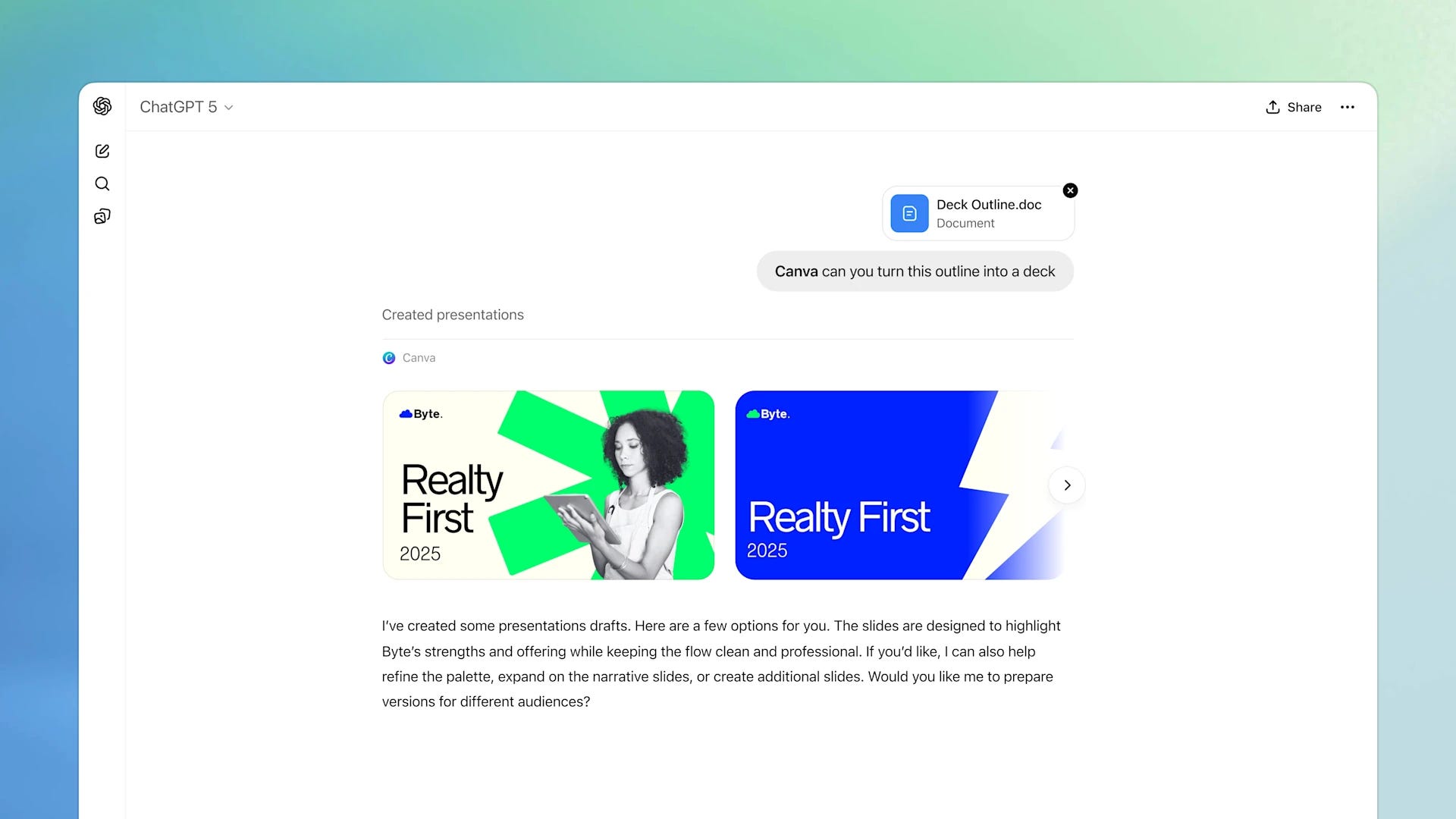
Something has been shifting in the last weeks, quietly. OpenAI introduced the idea of including payment links and completing a full purchase without leaving the chat.
Now they are releasing the first generation of apps that live inside ChatGPT. Booking, Canva, Spotify, Figma, Coursera. All running inside the same space.
Introducing apps in ChatGPT and the new Apps SDK
A new generation of apps you can chat with and the tools for developers to build them.
It sounds like a feature. It is not. It is an intention to change in how we use the internet.


The Shift
For years, the web meant moving around. You opened a tab, followed a link, switched tools.
Now, the movement happens inside the conversation. You speak to the system, and the system calls what you need.
The new Apps SDK, based on the Model Context Protocol, allows ChatGPT to connect with almost anything. You can plan a trip, design a deck, edit a prototype, or learn a course, all starting on the ChatGPT window.
What used to be a place for commands is now a space for dialogue.
The interface itself becomes the context.
It is not about speed anymore. It is about keeping everything inside one frame.
The Platform Ambition
This is where it gets more interesting. Once you can search, create and pay without leaving ChatGPT, OpenAI is not just competing with Google. It is becoming something closer to a meta layer of the web.
A single place where the internet comes to you.
Canva builds your deck.
Figma adapts your prototype.
Booking finds your stay.
Spotify makes your playlist.
ChatGPT explains what you are doing while you do it.
It looks seamless. It also looks closed.
And that is the paradox. The more integrated it becomes, the less open it feels.
Between Innovation and Dependency
The progress is impressive. But the more powerful these systems get, the harder it becomes to stay outside of them.
As a strategist, I see a huge opportunity here. As a user, I also see a risk.
A web where every action happens inside one ecosystem, one interface, one company.
What concerns me most is how much we are beginning to depend on the vision of a few people. Brilliant, disruptive, and genuinely talented minds who seem to act with good intentions.
But this constant acceleration, this idea of pushing forward at all costs, rarely comes with reasoning or moderation. It often creates more chaos than clarity.
The conversation around “people losing jobs” or “needing to adapt” is only part of it.
The deeper issue is that we are shaping our digital lives around the perspectives of a handful of groups that define progress through disruption alone.
We have seen this before with Google, Meta, and other platforms whose original missions sounded noble until they became ecosystems driven by investors, data, and growth over ethics.
OpenAI now feels dangerously close to that same path. Its progress is astonishing, but its speed leaves little room for reflection. And without reflection, even good intentions can build systems that work against the people they were meant to help.
The recent presentation of Sora 2 showed this even more clearly. The ability to generate realistic videos of yourself anywhere is a technical achievement, yes, but it also shows how quickly we are moving toward a kind of simulation-based creativity.
Something that looks real and fantastic but also feels increasingly empty and clearly dangerous.
My Insight
The challenge now is not to keep up with every new launch, but to understand what serves us.
To use these systems without letting them decide how we should use our time. The internet used to be a space of discovery. Now it is becoming a mirror that adapts to whoever is speaking to it.
What we do with that mirror will define how human this next version of the internet really is.